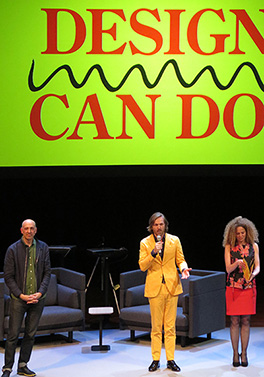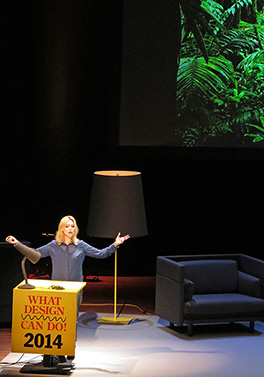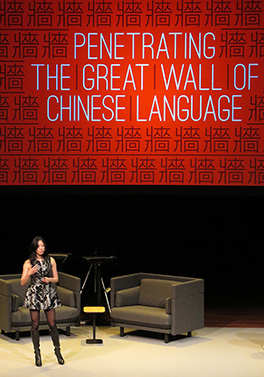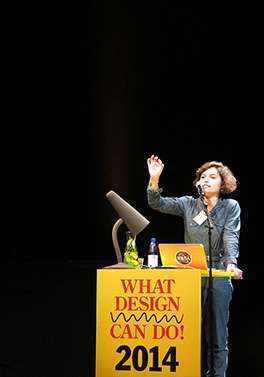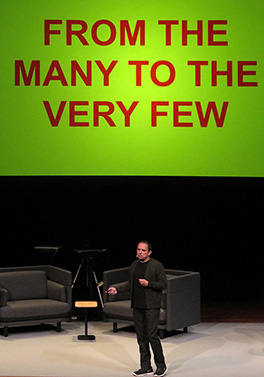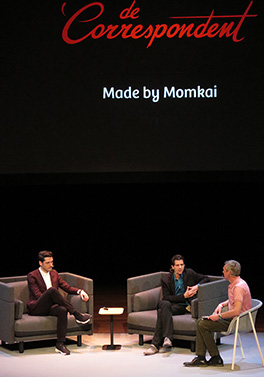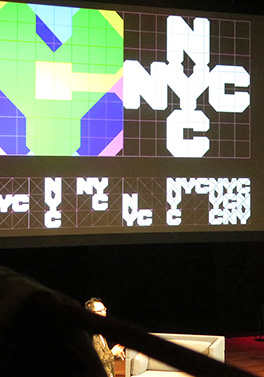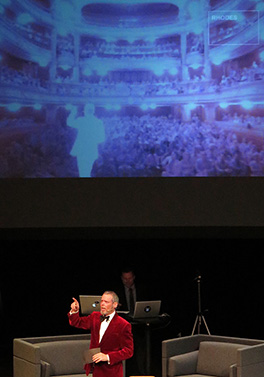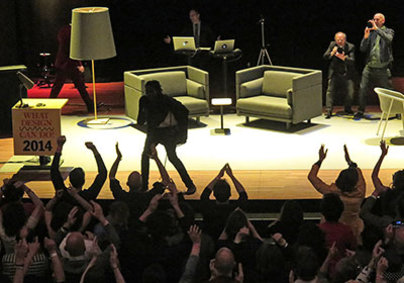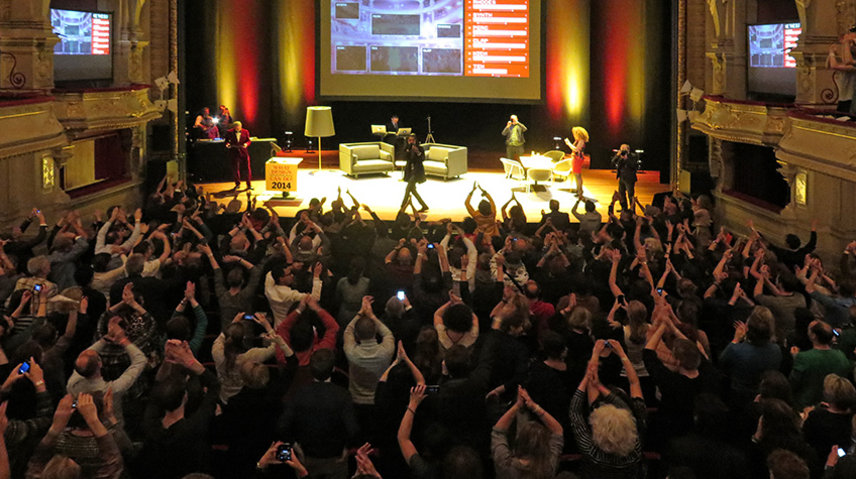
»What design can do« is a two-day conference in Amsterdam which exposes design as a catalyst of change and renewal and a way of addressing the societal questions of our time.
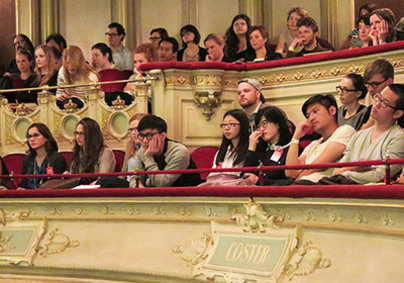
30 students of the Hochschule für Gestaltung (HfG) were visiting the conference »What design can do« in Amsterdam from 7th to 11th of May 2014. Besides the conference the HfG-group was visiting the offices of Kesselkramer and Tonic design studio as soon as the Stedlijk Museum.
Participants: Mathias Bär, Nadja Brossler, Nikolas Brückmann, Laura Brunner, Natasha Chikosha, Fan Ding, Ines Feyrer, Magdalena Fournillier, Ulrike Grünewald, Prof. Klaus Hesse, Kun Ji, Lea Keppler, Ingrid Kirkuauskaité, Felix Kosok, Nicole Landwehrs, Marcus Lüttgau, Xi Luo, Leonie Martin, Yuriy Matveev, Naomi Nube, Yannick Ploeger, Fabia Pospischil, Sophia Preussner, Corbin Raymond, Karin Rekowski, Tu Shen, Tobias Teickner, Polina Tsvetkova, Yuan Wang, Xuan Zheng and Heinrich Zimmermann.
As the design profession has expanded enormously in recent years, so too has the role played by designers in social, economic and sustainable developments. As a result, design can sometimes appear as a cure-all that has the solution for every major problem we face today. At the other end of the spectrum we have the type of design that has made aesthetics without substance a goal in itself. Both of these extremes inflate the very notion of design. What Design Can Do was formed in 2011 by a group of designers from various fields, with the aim of separating what is valuable from what is worthless. By showcasing best practices and visions, raising discussions and facilitating collaboration between disciplines, What Design Can Do wants to raise awareness among the public for the potential of creativity. At the same time, What Design Can Do calls on designers to take responsibility and consider how their work can impact the wider society. Both conference and this blog will be the platform for designers of all disciplines to manifest the social potential of their profession and to discuss alternative strategies for the future. Themes: Architecture, Art, Branding, Criticism, Curation, Education, Experience, Fashion, Film, Food, Graphic, Journalism, Product, Synthetic Biology, Technology, Theory.